
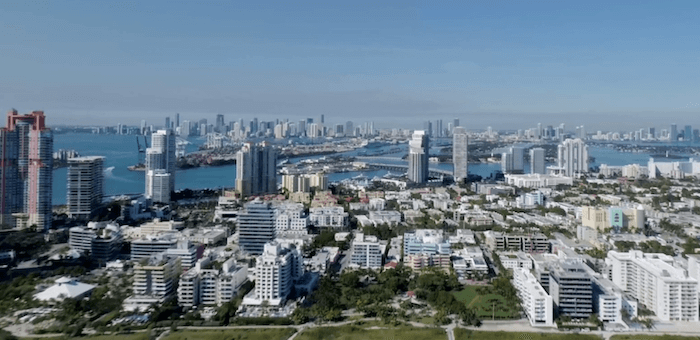
If you are looking to make investments that will always appreciate, look no further than the seventh largest real estate market in the U.S, the Miami real estate market. The town’s housing market is the fourth most valuable trailing after Washington, New York, and Los Angeles. From 2010, Miami’s housing market value has been appreciating by 4.7% year after year.
With such an increase, imagine what a property’s valuation would come 2025. A real estate investor would consider several reasons for investing in Miami. The big question is, “will the town be among the hottest real estate markets in the coming years?” To answer this, let us go through some Miami housing market trends.
Miami’s Real Estate Market Trend
Redfin’s and propertiesmiami.com statistics show that Miami has a competitive housing market. Houses on sale receive an average of one offer and sell in at least within 63 days. The average sale price of a home is $322,000, which is 6.7% higher since last year. There are around 25,000 homes for sale in Miami which range from $389-$55M. There are about 14,000 rental properties which range from $625-$250k per month.
After 2007 housing market decline, investors turned their interests to single-family rental properties. This means that investors who rent out their properties have an almost immediate cash flow.
Homes rented by single families in Miami have grown up to 30% within three years. So, if you are looking forward to real estate investment in Miami, consider venturing to single-family rental properties.
Miami has 122 neighborhoods, 160 middle schools, 242 elementary schools, 354 charter and private schools, and 104 high schools. The best areas to purchase real estate in the City of Miami are Aventura, Kendall, and Brickell. The Village of Key Biscayne is Miami’s most expensive neighborhood. Its median listing price is $1.4M. On the other hand, the most affordable neighborhood is Fontainebleau. The neighborhood’s median listing price is $214k. Below are some of the best neighborhoods to invest in real estate in Miami.
• City Center
• Biscayne Blvd/Miami Dade College
• SE 1st Ave/SE 2nd Ave
• NE 14th Street/N Miami Ave
• SW 1st Street/S Miami Ave
• NW 36th Street/N Miami Ave
• Buena Vista
• NE 2nd Avenue/E Flagler Street
• NW 17th Street/NW 7th Avenue
Reasons to Invest in Miami Real Estate
As is evident, Miami’s real estate investment is a lucrative business opportunity. It fetches investors good returns as home prices appreciate year after year. Both short-term and long-term investors find it favorable purchasing houses in Miami because of the following reasons:
The Beach
Miami’s subtropical weather and its magnificent beach attract thousands of tourists each year. As a result, foreigners from all over the world are buying houses to use them (especially beach house condos) as vocational properties. Almost half of the foreigners who purchase homes in Miami become Miami citizens.